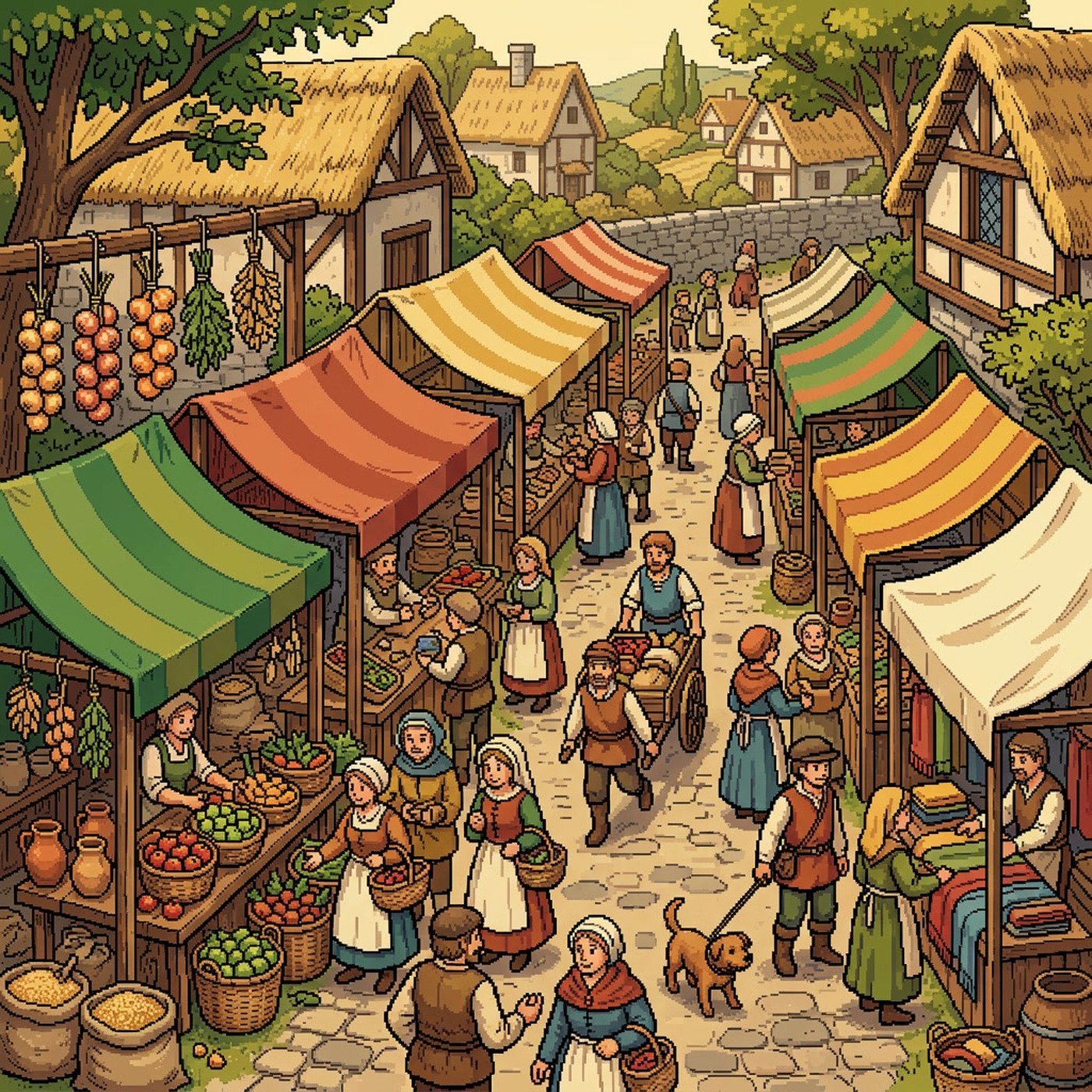
Village scenes need warmth, ordinariness and a sense of place. The music has to feel lived-in without turning sentimental. These tracks are for establishing shots, market squares, taverns, shops, routines and the quieter moments between plot beats.
Every track is AI-generated. The licence covers use in your own content, including monetised video.
Which tracks suit which jobs
Nine O’Clock in Thistlebrook
A warm village theme with a homely eight-bar motif, walking bass and soft bell accents. Use it for morning routines, a town waking up or conversation over a counter. It loops cleanly and stays light enough to sit under narration.
Ribbons Over the Square
An upbeat festival cue with a communal chant motif and clap-like bursts. Use it for a village square, a communal meal, a parade or any scene that needs warmth and movement. It loops, so it can run under a longer celebration sequence.
The Dented Tankard
A cosy tavern waltz. The feel is lived-in and slightly tipsy rather than rowdy. Use it for a bar scene, a quiet conversation in the corner or a room that needs to feel occupied. It loops without a hard ending, so it can sit under dialogue for as long as the scene needs.
Browsing the Counter
A light shop and menu loop. A short chirpy motif repeats with small variations. Use it for a shop counter, an inventory screen or a character browsing a market stall. It returns cleanly to the opening figure, so repeated browsing does not jar.
Long Way Home
A reflective ending-credits piece, bittersweet rather than sad. Use it for end credits, the last shot of a journey or a quiet village scene after the story resolves. It does not loop; it is written to fade or cadence out.
Where the Lantern Fell
A slow, mournful elegy. Use it for loss, bad news or the moment after a scene turns. It is deliberately sparse and does not loop; the unresolved ending is meant to sit under sorrow rather than resolve it.
When to reach for Village
Reach for Village when the scene needs to feel lived-in rather than dramatic. Use the looping tracks under dialogue and the ending pieces when the scene is closing. Avoid using the festival cue under a sombre moment; it is built to lift. If the scene is a working village rather than a celebration, Nine O’Clock in Thistlebrook or Browsing the Counter will usually fit better.